
Traditional Kimchi
Servings 3 kg
Equipment
- Fermentation containers A traditional ongi pot is lovely if you've got one, or a good sauerkraut crock with a water moat. But honestly? A BPA-free plastic tub works just fine.
- Large bowl or tray for salting the cabbage
- Knife
- Chopping board
- Small bowl for mixing the paste
- Grater for ginger
- Gloves (nitrile or latex preferable)
- Kitchen scales optional
- Garlic press or mincer optional
- Julienne peeler or mandoline optional
Ingredients
Cabbage
- 2 kg Chinese/napa cabbages
- 50 g Sea salt, Kosher salt or Pickling salt roughly 25g per kg of cabbage
Paste
- 2-3 cups Gochugaru or chilli powder of choice
- 18 cloves Garlic minced
- 1 Onion medium
- 2 tsp Fresh ginger finely grated
- 0.5 cup Fish sauce soy sauce for vegan version
- 1 tsp Thai Shrimp paste if you can get Saeujeot, use that instead (3 tbsp)
Porridge
- 2 cups Water
- 2 tbsp Sweet Rice Flour
- 2 tbsp Turbinado Sugar white or brown sugar is fine too
Optional additions
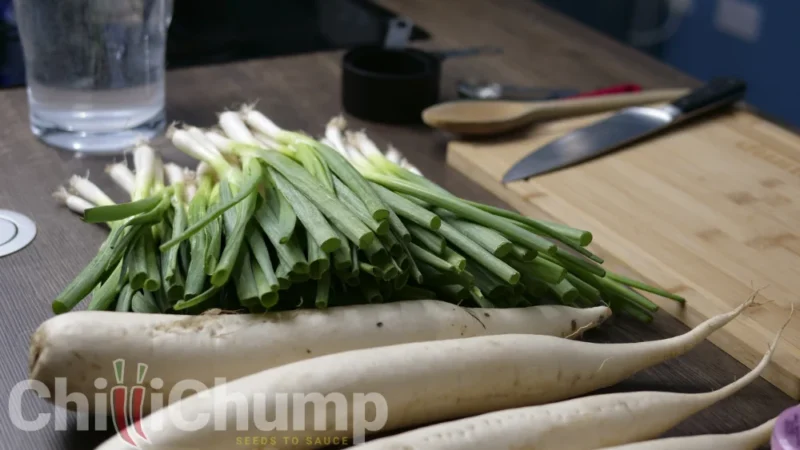
- 200 g Daikon radish julienned, matchstick length
- 4-5 Spring onions cut into 3cm pieces
- 100 g Carrots julienned, matchstick length
Instructions
Prep the cabbage (15 minutes)
- Trim the base where the core is too woody
- Halve the cabbages, small slice at the base to halve once again later
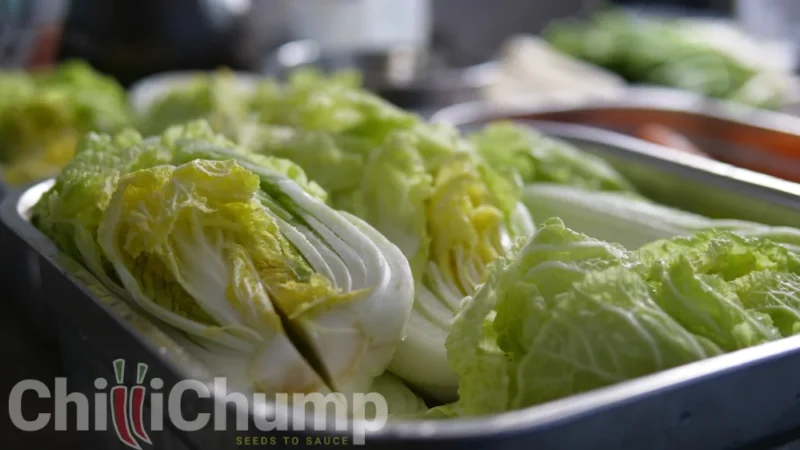
- Give a good rinse in cold water
- Remove any seriously damaged outer leaves
Salt the leaves (2 hours)
- Sprinkle sea salt generously between the leaves
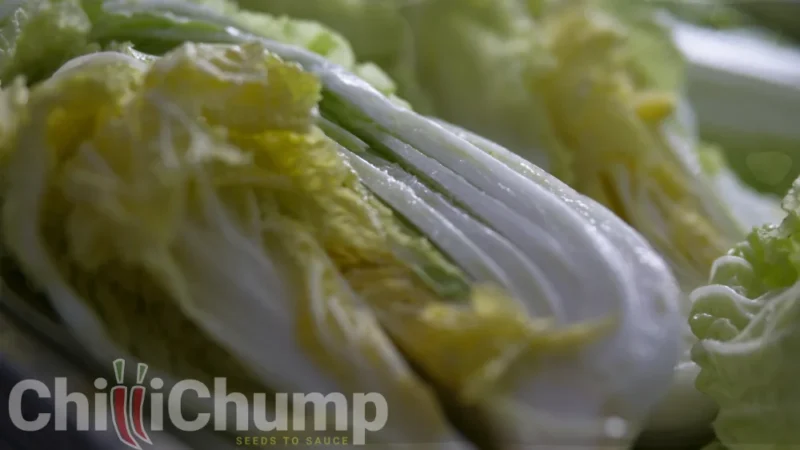
- Leave cabbage in a large bowl or tray
- Flip or turn the cabbage every 30 minutes
- Salt will draw moisture out (this is what you want)
- When turning, scoop the resulting liquid over the cabbages
Rinse and prepare (10 minutes)
- After 2 hours, rinse cabbage thoroughly under cold water to remove excess salt
- Allow to drain dry
- Leaves should be pliable at this stage
Make the chilli paste (5 minutes)
- In a bowl, combine gochugaru (or chilli powder), minced garlic, grated ginger, and fish sauce
- Taste it (should be punchy, garlicky, with good chilli kick)
- Mix the vegetables into the paste
Assemble (20 minutes)
- Put on gloves (seriously, this makes cleanup much easier)
- Split the halves into quarters, using the cut you made earlier
- Take each cabbage leaf and spread paste onto it, down to the base. Coat generously
- Fold the cabbage onto itself making a small pouch
- Pack tightly into your fermentation container (ongi pot, crock, or plastic tub)
- Press down firmly to eliminate air pockets
- Any leftover paste can go on top
Ferment (24-48 hours)
- Leave at room temperature (18-22°C is ideal)
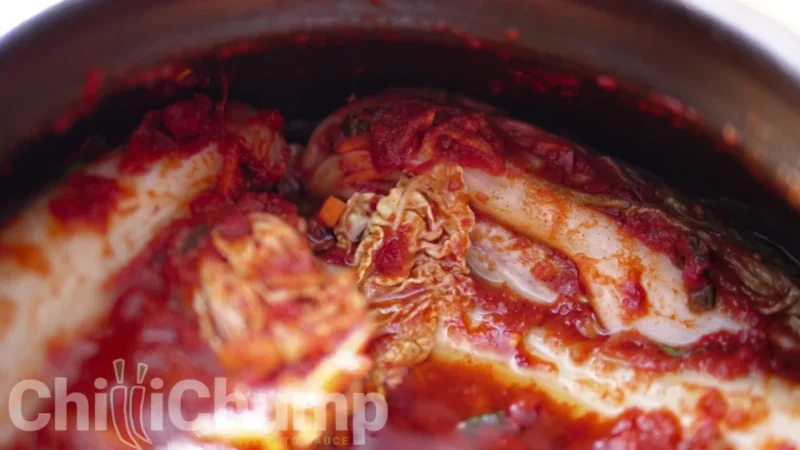
- Within 24 hours you should see bubbles forming
- For mild, fresh kimchi: refrigerate after 24 hours
- For tangier, funkier kimchi: leave 48 hours before refrigerating
- Once refrigerated, it will continue to ferment slowly