
Some of the links below are affiliate links, meaning that I will earn a commission if you click and make a purchase. This is at no extra cost to yourself.
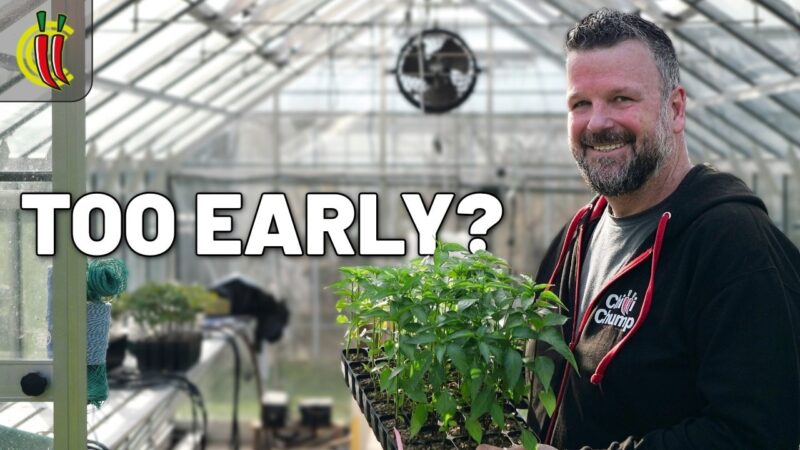
When can I take my chilli plants outside? I get asked this constantly at this time of year.
If I had my way, I’d move them out sooner than I actually do. When the sun starts shining, I get itchy feet. It doesn’t matter how good your grow lights are, they’re never going to compete with glorious sunshine. And by this time of year, the germination shed is getting very full.
But move them out too early and they don’t “toughen up”. They sulk, drop leaves, and stall for weeks. Move them out too late and you waste the best growing window.
Temperatures matter more than dates. That’s the simplest way I can put it.
Below, I’ll walk you through the practical temperature thresholds chilli growers need, how greenhouse timing changes things and what to do if you don’t have one. I’ll also share my lazy way to harden off so you can spend more time growing and less time fussing.
Quick answer: In the UK, don’t move chilli plants outside until frost risk has passed for your region (often mid-April in the south, May or later further north). Even then, aim for nights consistently above 10°C and daytime temperatures heading toward 16°C or higher. The real growth sweet spot is 20°C to 27°C, which for most of the UK means mid-June onwards.
If you’d prefer to watch the video instead of reading on, click the video below:
Table of Contents
UK Last Frost Dates: Why Timing Varies Across the Country

The UK is roughly comparable to USDA growing zones 8 or 9, but local conditions vary a lot. Coastal gardens, urban heat islands, valleys, exposed hilltop sites… all different. The most important detail to nail down first is your last frost date.
As a rough guide:
- Southern England: often around March to mid-April.
- Midlands & Northern England: commonly mid-April to late April.
- Scotland and Northern Ireland: can push toward May to late May.
Where I am (the Midlands), mid to late April is my realistic limit for timing outdoor moves. It’s about the limit of what I was willing to accept when we moved here. I wouldn’t go any further north, because that really does create some extra challenges.
What a lot of people miss is that your last frost date is only your “don’t die” line. It’s not your “start growing well” line. Plants need more than just survival temperatures to actually do anything useful.
The Temperature Thresholds That Actually Matter
Frost isn’t just about “cold air”. The real problem is when the plant’s root system gets near freezing. If roots freeze, it’s game over.
Here are the temperature thresholds that guide my decisions:
| Temperature | What Happens |
|---|---|
| 0°C | Frost can kill, especially plants in pots where roots are more exposed. |
| 6°C | Survives, but expect leaf drop and flower drop. |
| 10°C | Prolonged periods here can trigger dormancy behaviour. |
| 13°C | Alive, but slow and miserable. Won’t thrive. |
| 16°C | The “magic number” where most chilli species start growing again. |
| 20°C to 27°C | The sweet spot for strong growth, flowering, and fruiting. |
| 32°C+ | Heat stress becomes a factor (rare in the UK, but it happens). |
Why a Single Cold Night Isn’t the Real Problem
A single chilly night isn’t always the problem. A quick dip below 10°C overnight is usually fine and most of the time the soil will have enough latent heat to keep root temperatures a bit higher anyway. The real issue is when the 24-hour average sits around 10°C or below for a sustained period. That’s when your plants stall hard. They’re not dying, but they’re not growing either and the longer they sit at that temperature, the longer it takes them to come out of dormancy once conditions recover. In a short UK season, that lost time adds up quickly.
If You Have a Greenhouse, You Can Move Earlier (But It’s Not Magic)
A greenhouse can buy you a few extra weeks on each end of the season, but it’s not some magical thing. It still gets very cold in there at night unless you have a heater.
My Greenhouse Strategy
I aim to move plants into the greenhouse about 2 to 3 weeks before my last frost date. I use a small heater set to the frost setting so the greenhouse stays above roughly 4°C. You don’t need it to be tropical in there (which would cost an absolute fortune), just enough that if temperatures dip, the frost setting kicks in and keeps the worst of it away.
There’s also a practical benefit in how greenhouses behave during the day: the soil warms up and acts like thermal mass. That means even if nighttime temperatures dip to around 3°C to 4°C, the roots don’t crash instantly because the soil retains some of that daytime warmth.
No Greenhouse? You’ve Still Got Options (Watch the Soil Temp)
If you don’t have a greenhouse, don’t worry. I’ve used simple protective setups before and they can do a solid job. In some of my earlier videos, you’ll see I had a plastic greenhouse that cost me about £20 and it worked perfectly fine.
- Cold frame: helps protect from wind and cold air, and traps a bit of warmth.
- Bottle cloches: grab a 2-litre Coke bottle, cut off the bottom and pop it over your seedling. Cheap and surprisingly effective.
- Cheap plastic greenhouse: the kind you can pick up for around £20. Not fancy, but it does the job if you manage ventilation.
- Raised beds: if you plant directly into the ground, the soil can stay cold for months. Raising the bed warms the soil up quite a bit faster.
- Pots: my favourite, because you can control temperatures far more effectively than ground planting. Even inside that cheap plastic greenhouse I mentioned, I used pots and that’s what helped me maintain temperatures and grow some amazing chilli plants.
One thing to keep in mind: covering the plant helps the air temperature, but cold soil still punishes roots. The air cover is only half the story. If you’re planting outside without a greenhouse, pots or raised beds can make a real difference to root zone temperature.
When to Move Chilli Plants Outside in the UK (The Practical Rule)
Even after the risk of frost passes, I don’t treat “no frost” as the finish line. Chilli plants grow best when temperatures are consistently in the 20°C to 27°C range.
For the UK, that usually means you start seeing the real boost in flowering and fruiting around mid-June (assuming the weather cooperates). After that, you can often expect strong growth through June, July, August, and sometimes into September.
The Decision Process I Use
- Check your last frost date for your region (the rough regional guide above is enough).
- If you’re moving earlier than that, you need night protection: greenhouse, frost heater, cold frame or cloches.
- Aim for nights that aren’t regularly dipping into single digits, and especially avoid long stretches where averages sit around 10°C.
- If you want real growth, wait until you’re closer to that 16°C restart point and then into the 20°C to 27°C range.
Reality Check for the UK
Even when frost risk is “done”, your plants often don’t get going until mid-June, depending on the year. That’s when you usually see massive growth and a lot of flowering and fruiting happening. If you’ve been growing for a few seasons, you’ll know that feeling of waiting… and waiting… and then suddenly everything kicks off at once.
The Lazy Way to Harden Off (UK Edition)
Hardening off is basically: stop babying the plant, but don’t shock it.
Most people do the full shade-to-sun routine, moving trays in and out every day. Fair enough. I’m lazier and it’s actually one of the reasons I like to bring my plants out a little earlier than some people might.
Why the Lazy Method Can Work Here
Earlier in the season, the sun is still quite low in the sky. It’s not directly overhead like it’s going to be later in summer. It comes in at an angle, so the light is genuinely less intense than it’ll be in a couple of months. That means plants can acclimatise without you doing a daily marching routine with trays.
My Lazy Hardening Off Method
If I’m moving plants out by mid-April at the latest (Midlands area), I can often just take them straight out. I don’t shade anything. The plants acclimatise naturally because the sun isn’t strong enough to cause damage at that time of year. I focus more on temperature protection than sun protection at that stage.
I’ve covered this in more detail in my “Hardening Off the Lazy Way” video, so have a look at that if you want the full walkthrough.
When You Should Harden Off More Carefully
If you’re moving plants out later in the year, when the sun is punchier, you should acclimatise more carefully:
- Put plants outside in sunshine for part of the day.
- Move them into shade or shelter for the rest.
- Increase the exposure over several days.
If you live somewhere like Florida or Spain where you get strong sunshine even earlier in the year, you’d likely fry your plants taking them straight outdoors without hardening off. Shade netting becomes essential in those climates, not just a nice idea.
6 Common Mistakes That Wreck Chilli Plants in Spring
- Using your last frost date as the only rule. Temperatures can still be too low for growth even after frost risk has passed, leading to weeks of stalling.
- Forgetting that pots freeze faster than soil. Roots in pots are more exposed than roots in the ground. They suffer first.
- Moving plants out, then leaving them during a cold snap. The classic “I’ll risk it” moment. If a sharp cold spell is forecast, bring them in or cover them.
- No ventilation under cloches or mini covers. A warm day plus trapped humidity equals problems. Pop the lid or open the end during the day.
- Thinking “survival” equals “growth”. Temperatures between 6°C and 13°C might keep them alive, but they won’t be thriving. That’s time you can’t get back in a short UK season.
- Planting straight into cold ground without protection. If you’re going outside without a greenhouse, the ground soil can stay cold for months. Pots or raised beds help you avoid this.
Quick tip while you’re planning your outdoor move: get some marigolds in alongside your chillies. They’ll attract hoverflies and ladybugs, which will help keep aphids in check once your plants are outside. It’s one of the easiest things you can do to give your plants a better chance.
Quick Checklist: Move Your Chilli Plants Outside with Confidence
- No frost risk, or you’ve got night protection sorted.
- Avoid prolonged periods where averages sit around 10°C or below.
- Aim for 16°C as a restart temperature, then 20°C to 27°C for strong growth.
- Use pots or raised beds if soil temperature is holding you back.
- Harden off carefully if the sun is strong when you move them out.
Frequently Asked Questions
How early can I move chilli plants outside in the UK?
If you have a greenhouse, moving plants out about 2 to 3 weeks before your last frost date can work, as long as nights are protected with a frost heater or similar. Without a greenhouse, wait until frost risk is very low and temperatures are trending warmer.
What temperature kills chilli plants?
Around 0°C is the danger zone. The critical point is when the root system drops below freezing and this happens faster in pots than in ground soil.
Will chillies survive at 6°C?
Usually yes, but expect stress. Leaf drop and flower drop are common at this temperature. They’ll survive, but they won’t be happy about it.
When do chilli plants start growing again?
16°C is a useful benchmark where most common chilli species resume growth. The real sweet spot for strong flowering and fruiting is 20°C to 27°C.
Do I need to harden off my chillies in the UK?
It depends on timing. If you’re moving plants out early in the season (around mid-April in my area), the sun is still low in the sky and less intense, so you can often skip the gradual shading routine. If you’re moving them out later when the sun is stronger, a gradual exposure over several days is worth doing.
What’s the best alternative to a greenhouse?
A cold frame is a solid option. Cloches work too, even a 2-litre bottle with the bottom cut off. A cheap plastic greenhouse (around £20) does a decent job if you ventilate it. If you’re planting into the ground, raised beds help the soil warm faster. Pots give you the most control overall because you can move them around as conditions change.
Can grow lights replace sunshine?
Grow lights are brilliant for getting seedlings started indoors, but they’re never going to compete with real sunshine. Once conditions are warm enough outside, your plants will do far better in natural light.
Want More No-Faff Growing Guides?
I share practical, UK-focused chilli growing content all season. Subscribe on YouTube or join the email list and you’ll sidestep most of the usual mistakes before they happen.
If I can leave you with one guiding idea, it’s this: timing isn’t just a calendar date. It’s about protecting roots from frost and then steering your plants into the temperature range where growth actually restarts. Get that bit right and the rest follows.