
Some of the links below are affiliate links, meaning that I will earn a commission if you click and make a purchase. This is at no extra cost to yourself.
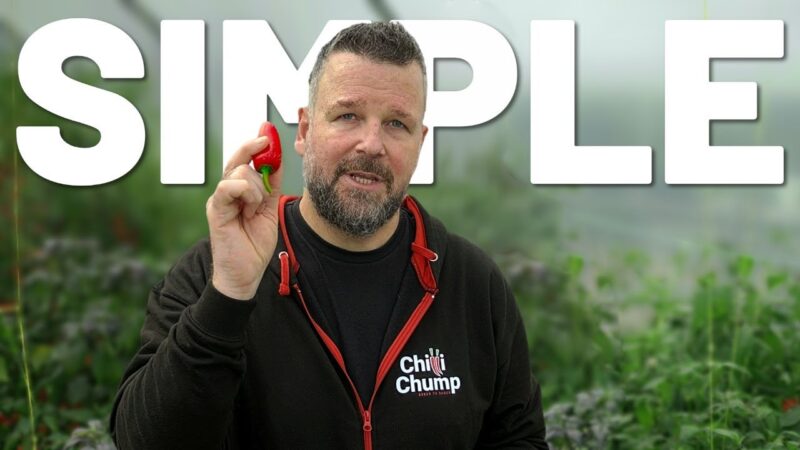
You don’t need expensive gear to grow chillies at home. You don’t need a polytunnel. Here’s what you actually need and what you can ignore.
People overcomplicate chilli growing. After decades of doing this and getting it wrong as often as getting it right, I can tell you that the chilli growing fundamentals are genuinely simple. Yes, there are things you can add to improve your results. But you don’t need them to get started and you don’t need them to grow a decent harvest.

Table of Contents
What You Actually Need (The One-Line Version)
Stick a seed in some soil, keep it warm until it germinates, give it light and water, feed it now and then. That’s it. By the end of the season, you’ll have chillies.
Everything below is the practical detail behind that one line.
If you’d rather watch my video on this then click below:
1. Seeds: Free or Bought
Everything starts with a seed. You can grab quality seed from chillichumpseeds.com or simply save seeds from a chilli you’ve already eaten.
The key: use fully ripe fruit. Jalapeño, for example, are green when unripe and red when ripe. Cut it open, take a few seeds, let them dry out fully, then plant.
Supermarket chillies are often cross-pollinated, so you might not get an identical plant, but you’ll still get healthy, productive results, and possibly something completely unique. Best of all, since you already bought the chilli to eat, the seeds are essentially free. For more information on saving chilli pepper seeds – take a look at this article: Save Pepper Seeds – How to Harvest Chilli Seeds.
2. Germination: Warm and Moist Is All You Need
Chilli seeds love warmth, especially heat-lovers like habaneros and other Capsicum chinense varieties. Drop seeds into cold compost on a draughty windowsill and they’ll sulk for weeks, or rot.
You don’t need a fancy propagator. Here’s the no-fuss method:
- Fill a small takeaway tub with cheap seed compost (not garden soil).
- Plant seeds at roughly the same depth as the seed’s length.
- Keep the compost damp, not soaked.
- Cover with cling film or a lid to hold in moisture.
- Place somewhere warm. The top of the fridge works brilliantly, or near anything that gives off gentle heat.
When the first green shoots appear, remove the cover and move them somewhere bright.
Check out Germinate Chilli Pepper Seeds Like a Pro for more detailed info.
3. Light: The Thing Most People Get Wrong
Once seedlings are up, light is everything. A south-facing windowsill (north-facing if you’re in the southern hemisphere) is your best free option.
If your seedlings are growing tall and spindly with big gaps between the leaves, that’s called being “leggy” and it just means they need more light. Move them closer to the window, or supplement with a cheap desk lamp or basic LED shop light positioned close to the plants.
You don’t need expensive LED grow panels to start. In my early days I used fluorescent tubes and cheap CFLs. They work.
4. Potting Up: When to Move Them On
When your plant has three or four sets of true leaves, it’s time for a bigger pot.
You don’t need special containers. Old ice cream tubs, takeaway boxes, even a cut-down water jug are all perfectly good. I tend to pot up in stages to encourage strong root development, but if you want to keep things simple, sowing into a larger pot from the start works too.
Just make sure whatever you use drains well. Use decent compost or garden soil. Chillies are hungry plants and will thank you for it.
5. Feeding and Watering
Two things kill more chilli plants than anything else: overwatering and not feeding at all.
Watering: Keep the soil moist but never waterlogged. Always let excess water drain away freely. If in doubt, let the top inch of soil dry out before watering again.
Feeding: Tomato feed is my go-to, it’s cheap and works brilliantly. Seaweed fertiliser is another favourite, gentle enough to use from seedling stage all the way through harvest. Start at half strength and feed every few waterings. Don’t overdo it.
6. Flowers, Fruit and Saving Seed
By the end of the season, flowers will set and develop into pods. Pick them when they ripen and enjoy them.
Want to grow the same plants again next year? Save seeds from fully ripe pods, dry them out properly and store in a cool, dry place. Do this season after season and you start developing plants that are genuinely yours, adapted to your climate, your setup, your taste.
The Bare Minimum Grow Chillies at Home Checklist
Everything you need to get started:
- Seeds: bought, or saved from a ripe supermarket chilli.
- Cheap seed compost: avoid raw garden soil for germination.
- Small containers: for germination, larger pots for growing on.
- Warmth: top of the fridge or somewhere that gives off gentle heat.
- Light: a sunny windowsill or basic lamp to stop seedlings going leggy.
- Simple fertiliser: tomato feed or seaweed, used at half strength.
- Patience: and a watering routine: moist, not waterlogged.
What to Add When You’re Ready to Level Up
Once the basics feel natural, there’s plenty you can add to improve your results: propagators, proper grow lights, a greenhouse or polytunnel, basic automation for watering and temperature. All of those things help. None of them are required to grow a decent plant and a good harvest.
FAQ
Can I use seeds from a supermarket chilli?
Yes. Harvest from a fully ripe pod, dry the seeds and plant. They may not grow true if the parent was cross-pollinated, but you’ll still get healthy plants and possibly something completely new and interesting.
How deep should I plant chilli seeds?
A reliable rule of thumb: as deep as the seed is long. That works for most small seeds.
Where’s the best spot to keep seed trays warm?
Top of the fridge is a classic. Anywhere that gives off gentle, consistent heat will do. Keep trays covered until germination, then remove the cover and move them straight to light.
My seedlings are leggy, what do I do?
They need more light. Move them to a sunnier windowsill, or get a basic lamp positioned close to the plants. Give them as many hours of good light as you can.
What fertiliser should I use?
Tomato feed or seaweed fertiliser. Start at half strength, feed every few waterings, and make sure the compost drains freely so roots don’t sit in wet soil.
Can I plant straight into a large pot from seed?
Yes, but it’s harder to keep a large pot warm during germination. Starting small and potting up is usually easier, and tends to produce stronger root systems.
If this helped, and you’d like guides on making hot sauce, fermentation or low-tech growing setups at home — let me know in the comments. Until next time, stay spicy.