
Some of the links below are affiliate links, meaning that I will earn a commission if you click and make a purchase. This is at no extra cost to yourself.
I love Kimchi. I love making it, eating it, talking about it (sorry Mrs ChilliChump!). Each year I make a big batch in the wintertime. And this year I wanted to share the process, and my recipe with you.
It would be amazing if I could grow everything that is needed for a good kimchi. This year I had to settle for my beautiful Kimchi chillies, and an attempt at growing Napa or Chinese Cabbage. The cabbage growing wasn’t too successful, but here’s the beautiful thing about kimchi: it doesn’t care. Those “reject” cabbages fermented into something tangy, punchy and utterly delicious.
I make kimchi because it’s forgiving, practical, and it uses up what would otherwise go to waste. Plus, once you’ve tasted good homemade fermented kimchi, the shop-bought stuff just doesn’t cut it anymore. The process is straightforward: salt the cabbage, make a chilli paste, stuff the leaves, and let nature do the rest.
Table of Contents
What You’ll Need
The basics:

- Cabbage: Chinese or napa cabbage is traditional, but honestly, if your homegrown variety is a bit rough around the edges, that’s absolutely fine. Just trim off the really woody bits.
- Salt: Sea salt, kosher salt, or pickling salt. Avoid iodized table salt if you can; it can interfere with fermentation.
- Chilli powder: Gochugaru (Korean red pepper flakes) is traditional and gives that distinctive flavour. If you can’t get it, use whatever chilli powder you’ve got. Just be aware the flavour profile will be different. And feel free to spice it up with a few superhots too!
- Other veg: Radish, spring onions, carrots.
- Flavour builders: Garlic, ginger, fish sauce (or soy sauce for a vegan version).
- Container: A traditional ongi pot is lovely if you’ve got one, or a good sauerkraut crock with a water moat. But honestly? A BPA-free plastic tub works just fine.
Pro tip from experience: Don’t stress about having the “perfect” setup. I’ve made brilliant kimchi in everything from ceramic crocks to plastic containers. What matters is the process, not fancy equipment.
Notes
On salt quantities: This is flexible. I use roughly 50g salt per kg of cabbage, but you can adjust. A little extra is safer than too little (you’ll rinse it anyway).
On chilli heat: Start with 2 cups if you’re unsure. You can always add more next time. Gochugaru has a specific flavour, but homegrown chilli powder works brilliantly too.
Storage: Keeps in the fridge for several months, often up to a year. Flavour becomes stronger and texture softer over time.
Equipment tip: Gloves aren’t optional in my book. Your hands will thank you.
Traditional Kimchi
Equipment
- Fermentation containers A traditional ongi pot is lovely if you've got one, or a good sauerkraut crock with a water moat. But honestly? A BPA-free plastic tub works just fine.
- Large bowl or tray for salting the cabbage
- Knife
- Chopping board
- Small bowl for mixing the paste
- Grater for ginger
- Gloves (nitrile or latex preferable)
- Kitchen scales optional
- Garlic press or mincer optional
- Julienne peeler or mandoline optional
Ingredients
Cabbage
- 2 kg Chinese/napa cabbages
- 50 g Sea salt, Kosher salt or Pickling salt roughly 25g per kg of cabbage
Paste
- 2-3 cups Gochugaru or chilli powder of choice
- 18 cloves Garlic minced
- 1 Onion medium
- 2 tsp Fresh ginger finely grated
- 0.5 cup Fish sauce soy sauce for vegan version
- 1 tsp Thai Shrimp paste if you can get Saeujeot, use that instead (3 tbsp)
Porridge
- 2 cups Water
- 2 tbsp Sweet Rice Flour
- 2 tbsp Turbinado Sugar white or brown sugar is fine too
Optional additions
- 200 g Daikon radish julienned, matchstick length
- 4-5 Spring onions cut into 3cm pieces
- 100 g Carrots julienned, matchstick length
Instructions
Prep the cabbage (15 minutes)
- Trim the base where the core is too woody
- Halve the cabbages, small slice at the base to halve once again later
- Give a good rinse in cold water
- Remove any seriously damaged outer leaves
Salt the leaves (2 hours)
- Sprinkle sea salt generously between the leaves
- Leave cabbage in a large bowl or tray
- Flip or turn the cabbage every 30 minutes
- Salt will draw moisture out (this is what you want)
- When turning, scoop the resulting liquid over the cabbages
Rinse and prepare (10 minutes)
- After 2 hours, rinse cabbage thoroughly under cold water to remove excess salt
- Allow to drain dry
- Leaves should be pliable at this stage
Make the chilli paste (5 minutes)
- In a bowl, combine gochugaru (or chilli powder), minced garlic, grated ginger, and fish sauce
- Taste it (should be punchy, garlicky, with good chilli kick)
- Mix the vegetables into the paste
Assemble (20 minutes)
- Put on gloves (seriously, this makes cleanup much easier)
- Split the halves into quarters, using the cut you made earlier
- Take each cabbage leaf and spread paste onto it, down to the base. Coat generously
- Fold the cabbage onto itself making a small pouch
- Pack tightly into your fermentation container (ongi pot, crock, or plastic tub)
- Press down firmly to eliminate air pockets
- Any leftover paste can go on top
Ferment (24-48 hours)
- Leave at room temperature (18-22°C is ideal)
- Within 24 hours you should see bubbles forming
- For mild, fresh kimchi: refrigerate after 24 hours
- For tangier, funkier kimchi: leave 48 hours before refrigerating
- Once refrigerated, it will continue to ferment slowly
Fermentation: When to Stop
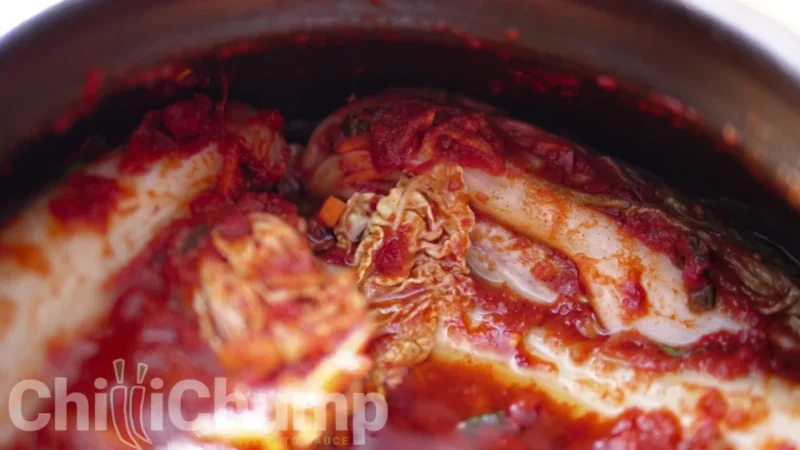
Leave your kimchi out at room temperature to kick off fermentation. Within 24 hours you should see bubbles and smell that fresh, tangy aroma developing. Now you’ve got choices:
- Mild and fresh? Move it to the fridge after 24 hours.
- Tangier and funkier? Leave it out for up to 48 hours before refrigerating.
Longer fermentation is safe but will change the flavour and texture significantly. I usually go for the 24-48 hour window, then refrigerate.
Storage life: Refrigerated kimchi will keep for months. I’ve had jars going strong after a year, though in practice, most batches disappear far sooner because it’s just too good.
Troubleshooting
No bubbles forming? Check your temperature. Fermentation slows right down in the cold. Move it somewhere warmer for a day or two.
Too salty? Rinse more thoroughly during the initial salt step next time. Most recipes are quite forgiving though.
Surface mould? Rare if everything’s submerged, but if it happens, scrape off the affected bit and make sure everything else is pushed below the liquid. It’s usually fine.
How I Use It
Kimchi isn’t just a side dish (though it’s brilliant with rice and a fried egg for a quick meal). Here’s what I actually do with it:
- Stir-fry chopped kimchi with chicken thighs and rice (simple, fast, flavourful).
- Chop some up and add it to soups or stews to brighten them up.
- Add it to sandwiches for a spicy, tangy kick.
- Eat it straight from the jar while standing by the fridge (don’t pretend you don’t do this).
My Equipment Recommendations
I use an ongi pot when I want to feel traditional, and a small crock for experimental batches. Plastic tubs are my workhorse containers (no fuss, easy to clean, and they work perfectly well).
If you’re planning to ferment lots of things beyond kimchi, investing in a good weighted system can be worth it. But for getting started? Don’t overthink it.
Final Thoughts
The beautiful thing about kimchi is that it rewards you for using what you’ve got. Those imperfect, homegrown cabbages? They’re perfect for this. The process is forgiving enough that you can adapt it to your situation, your ingredients, and your taste preferences.
Stop overthinking it. Make a batch. You’ll learn more from doing it once than reading about it ten times.
Frequently Asked Questions
How long should I ferment before refrigerating?
24 hours gives you mild, fresh kimchi. 48 hours develops more tang. Longer is safe but changes the flavour significantly. Refrigerate when it tastes right to you.
What salt works best?
Sea salt, kosher salt, or pickling salt. Avoid iodized table salt if possible; it can interfere with fermentation.
Can I use imperfect homegrown cabbages?
Absolutely. Trim the woody core, rinse off soil and slug damage, and carry on. The fermentation process is remarkably forgiving.
Do I need special equipment?
No. Traditional pots and crocks are lovely but not essential. BPA-free plastic containers, jars, or anything non-reactive will work fine. Just keep the vegetables packed and submerged.
How long will it keep?
Refrigerated kimchi stays safe and tasty for months. I’ve had batches still going strong after a year, though the flavour becomes stronger and the texture softer over time. Most batches disappear far sooner because it’s delicious.
What if I don’t have gochugaru?
Use whatever chilli powder you’ve got. The flavour will be different from traditional kimchi, but it’ll still ferment beautifully and taste good. I’ve used homegrown chilli powder with excellent results.
Why isn’t my kimchi bubbling?
Temperature is usually the culprit. Fermentation slows down in cold environments. Move it somewhere warmer for a day or two and it should kick off.
Can I add other vegetables?
Definitely. Radish, spring onions, and carrots are traditional additions. Experiment with what you’ve got growing. Just maintain the same salt-and-ferment process.